
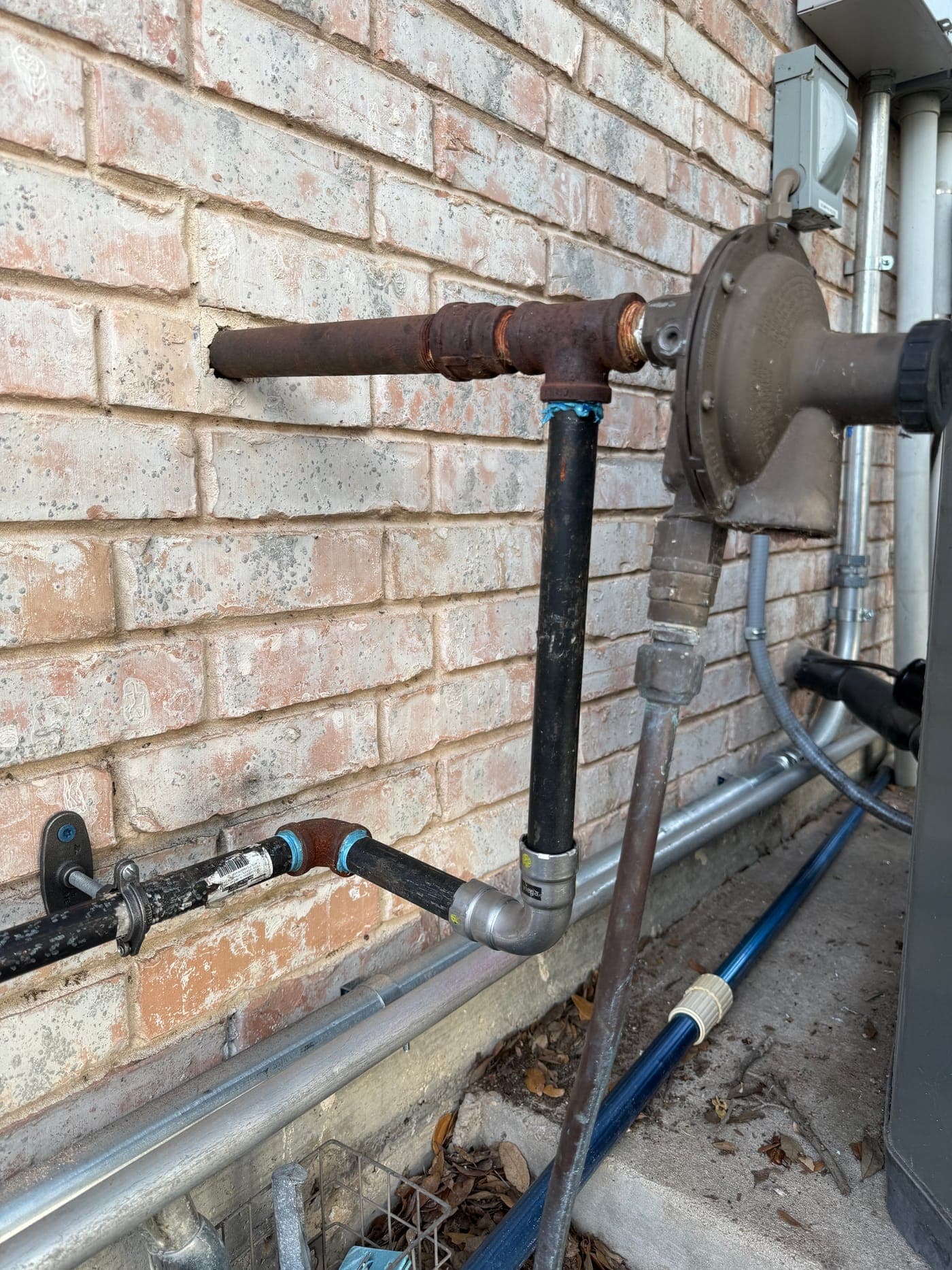
If your home already has natural gas, it's tempting to assume the generator just tees into the line feeding your water heater and furnace. Sometimes that works. Often it doesn't, because a standby generator can draw far more gas than every other appliance in the house combined. Whether your gas meter and supply line can carry that load is one of the first things we check, and it shapes the rest of the installation.
The short answer
A natural gas standby generator needs a meter and supply line sized to carry the generator at full load on top of your existing gas appliances, at the pressure the manufacturer specifies. On many homes the existing service is fine. On older services, or where the generator is large, the meter or regulator may need an upgrade through your gas utility. We size the fuel path during the assessment, before the unit is ever set, and we handle the utility coordination as part of the job.
Why a generator changes the math on your gas service
Your gas meter and service line were sized for the appliances the house had when it was built. A furnace, water heater and range rarely all run at full fire at the same time. A standby generator is different. When the grid drops, it can run at heavy load for as long as the outage lasts, and it does so while your furnace or water heater may also be running.
Generac's own guidance is that fuel supplies should be sized based on 100% load, not on how hard the generator usually works. That means planning for the worst moment, when the house is pulling everything the generator can give. Getting the size of the generator right is the starting point, which is why generator sizing and load calculation comes first.
What we check during the assessment
When we look at a natural gas installation, we check:
- Total gas demand. We add the generator's full-load demand to every gas appliance in the house, using the manufacturer's published fuel figures.
- Meter capacity. We confirm whether the existing meter can deliver that combined demand.
- Delivered pressure. The generator needs gas within a specific pressure range at the unit, not just at the meter.
- Pipe size and run length. Longer runs and more fittings mean more pressure loss, so the line from the meter to the generator is sized for the actual route.
- Regulator selection. The regulator has to match the generator's demand and the pressure the utility delivers.
Generac publishes its gas requirement in inches of water column. For its air-cooled home standby models, it lists natural gas at 3.5 to 7 inches of water column, and it notes that low fuel pressure can leave a generator unable to support its load. Kohler and other manufacturers publish their own figures for each model, which is why we work from the spec sheet for the exact unit going in.
When a meter upgrade is needed
If the combined demand is more than your meter can deliver, or delivered pressure drops too far under load, the fix usually sits with the utility. That can mean a larger meter, a different regulator, or a change in delivery pressure. This is most common on older homes where the original service was sized for a smaller set of appliances.
The utility owns the meter and the service line up to it, so the upgrade itself is their work. Our job is to give them the load information they need, schedule around their visit, and make sure everything on the house side of the meter is ready. Utilities treat meter sets as their own work. Atmos Energy, for example, has contractors request and schedule service lines and meter sets through its builder services team.
Which gas utility serves your home
Who supplies your gas depends on where you live. The Railroad Commission of Texas publishes a table of natural gas service to Texas cities by utility. In it, Fort Worth is served by Atmos Energy and Aledo by Texas Gas Service.
Much of rural Parker and Palo Pinto counties has no piped gas service at all. If that's your situation, propane is the practical fuel. Our guide to propane vs natural gas for a standby generator covers how the two compare for runtime, tank sizing and output.
Natural gas and generator output
Natural gas carries slightly less energy per cubic foot than propane, so the same generator is typically rated a little lower on natural gas, commonly around ten percent. We account for that when we size the unit, so a natural gas generator still covers the loads you chose.
Natural gas installations in Fort Worth and Tarrant County
Fort Worth has widespread natural gas service through Atmos Energy, which makes natural gas a common fuel choice for our Fort Worth generator installations. On older homes, meter capacity is worth checking early, because those services were sized before a generator was part of the plan.
How we handle the fuel side of the job
On every standby generator installation, the fuel work is part of the scope, not something you arrange separately. That includes:
- Sizing the line and selecting the regulator to match the generator's demand
- Mapping the fuel and wire routes before anyone digs
- Coordinating with the gas utility on any meter or regulator change
- Finishing with a live simulated outage so you can watch the system carry the house under real load
Talk to Armored Power Systems
Thinking about a natural gas generator and not sure your meter can handle it? We'll check your gas service, size the fuel path and tell you exactly what the installation needs.
- Call or text: (817) 381-6158
- Email: info@armoredpowersystems.com