
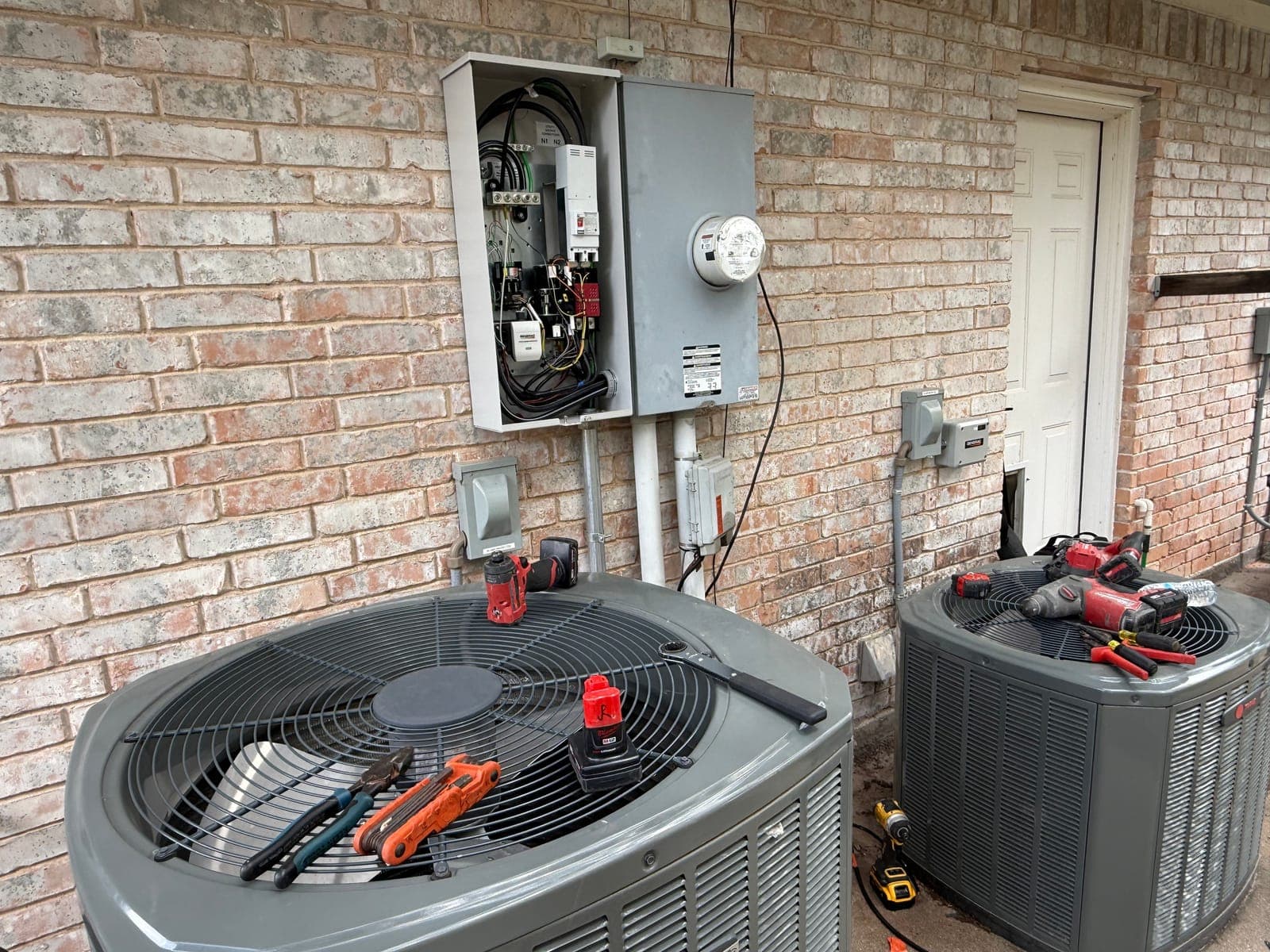
When the power goes out, there are two common ways to run part or all of a house on a generator without endangering anyone. One is a portable generator connected through an interlock kit on the main panel. The other is a permanently installed standby generator with an automatic transfer switch. Both solve the same safety problem in very different ways, and the right choice depends on what you need the house to do during an outage and who will be home to make it happen.
The problem both of them solve
A generator connected to a house has to be isolated from the utility lines. If it is not, the generator can push power backward through the service and onto the grid. The Occupational Safety and Health Administration's fact sheet on portable generators warns never to attach a generator directly to a building's electrical system unless a qualified electrician has properly installed it with a transfer switch, because a direct connection can energize wiring for great distances and create a risk of electrocution for utility workers.
The Electrical Safety Foundation International makes the same point in its backfeed safety guidance: transfer equipment isolates utility power from generator power, and it should only be installed by a qualified electrician. An extension-cord arrangement that feeds a dryer outlet, sometimes called a suicide cord, is exactly the backfeed hazard these rules exist to prevent.
How a generator interlock kit works
An interlock kit is a mechanical plate or slide mounted on the front of the main electrical panel. It physically prevents the main breaker and a dedicated generator breaker from being switched on at the same time. A portable generator plugs into an inlet box on the outside of the house, which feeds that generator breaker.
During an outage, the sequence is manual:
- Roll the portable generator outdoors to a safe location and connect it to the inlet.
- Start the generator.
- Switch off the main breaker, slide the interlock, and switch on the generator breaker.
- Turn on only the circuits the generator can carry, and manage them yourself.
An interlock must be listed for the specific panel it is installed on and installed under permit. The arrangement is only as safe as the person operating it, and it only works when someone is home and able to do every step.
How an automatic transfer switch works
A standby generator sits permanently on a pad outside and runs on natural gas or propane. An automatic transfer switch watches the utility supply. When it fails, the switch signals the generator to start, waits for the engine to stabilize, disconnects the house from the utility and connects it to the generator. When utility power returns and holds, it transfers back and lets the engine cool down before shutting off. Nobody has to be home.
Because the generator and the switch are designed and installed together, the system can be sized to run the whole house or a chosen set of essential circuits, and load management can keep large appliances from starting at the same moment.
The honest comparison
An interlock with a portable generator suits a homeowner who:
- Is home during most outages and comfortable operating the equipment.
- Needs a few essential circuits, such as the refrigerator, some lights and a furnace fan, rather than the whole house.
- Already owns a suitable portable generator and has a safe outdoor spot to run it.
A standby generator with an automatic transfer switch suits a homeowner who:
- Travels, works away from home, or has family members who could not safely run a portable unit.
- Needs the house to keep working on its own, including air conditioning, a well pump or medical equipment.
- Wants backup power that starts on its own, day or night, without anyone going outside in a storm.
Safety rules for portable generators
If you choose the portable route, carbon monoxide is the hazard that kills people. The Consumer Product Safety Commission states on its generator safety page that carbon monoxide from a generator can kill in minutes, and that portable generators must never be used indoors or in garages, basements or sheds. FEMA's power outage preparedness sheet adds that generators should be used outdoors and at least 20 feet away from building openings. Install battery-powered carbon monoxide alarms on every level of the home.
A standby generator removes most of that risk because it is installed outdoors at a location chosen to meet code and manufacturer clearances, and it is never moved or refueled by hand during a storm.
How we help you decide
The decision usually comes down to what has to run and who will be there to run it. During an assessment, we look at the panel, the service and the loads that matter to you, and tell you plainly what each option would take at your address. If a standby system makes sense, our standby generator installation page walks through how we size, permit and commission it, and our generator sizing page explains how we match the unit to your actual loads.
Talk to Armored Power Systems
Weighing a portable generator against a standby system? Tell us what you need to keep running and we will give you a straight answer on both.
Call (817) 381-6158 or email info@armoredpowersystems.com.